Economic Impact Catalyst New Website

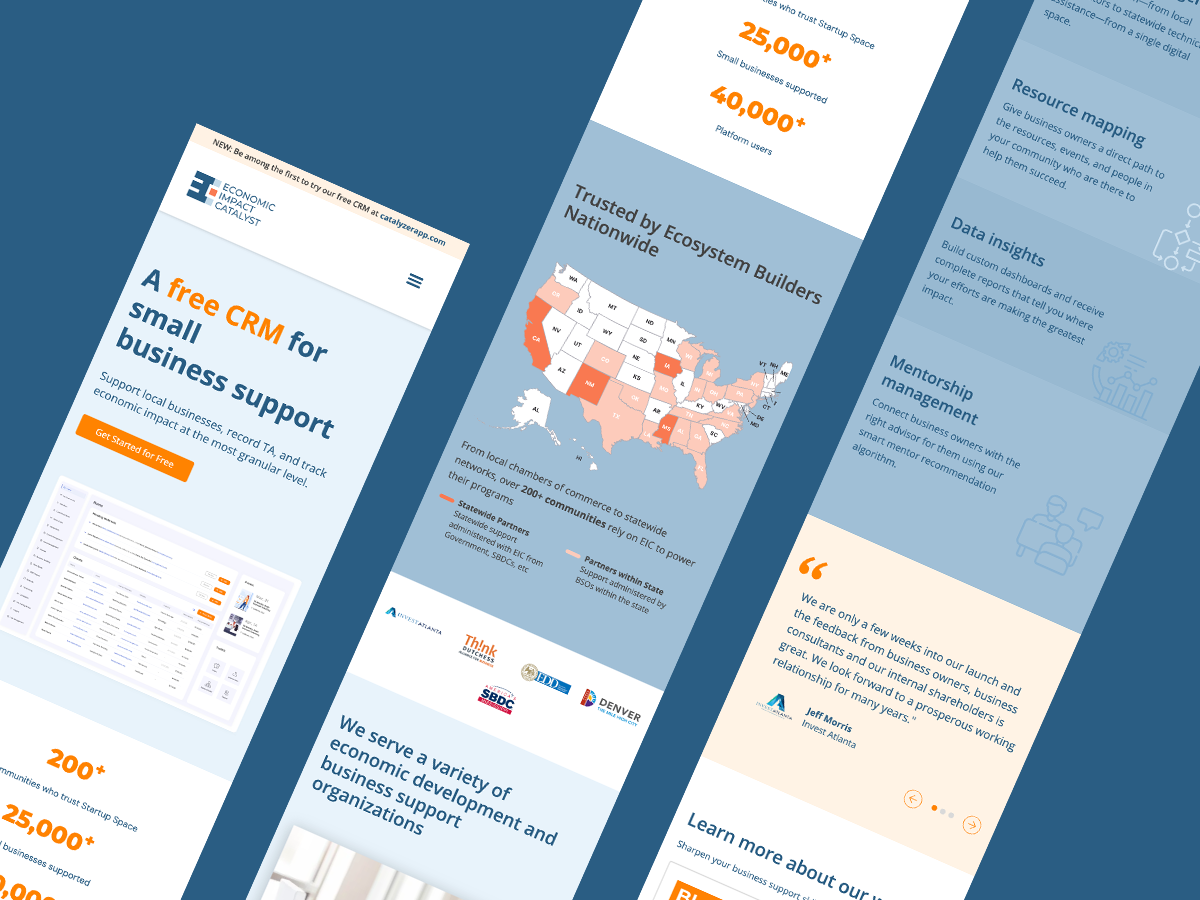
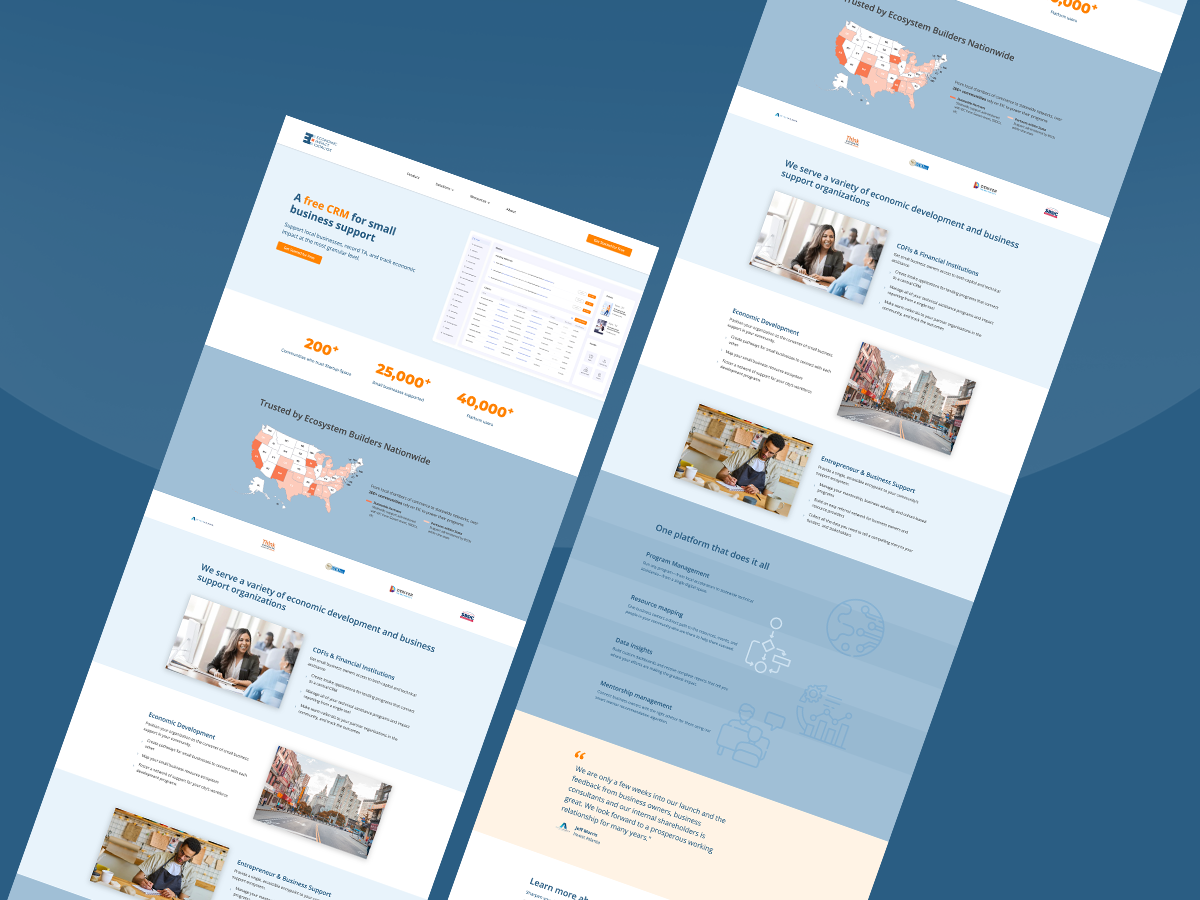
A free CRM for small business support

Website Design

Result

Within the first quarter of launch, the redesigned page contributed to a 22% increase in demo requests. Stakeholders noted a clear improvement in both clarity and overall professionalism, citing the page as a stronger representation of the product’s value.

The modular design system has since been adopted as a template for future product pages, creating consistency across the platform while reducing design and development time for new launches.

Project Details

Brief

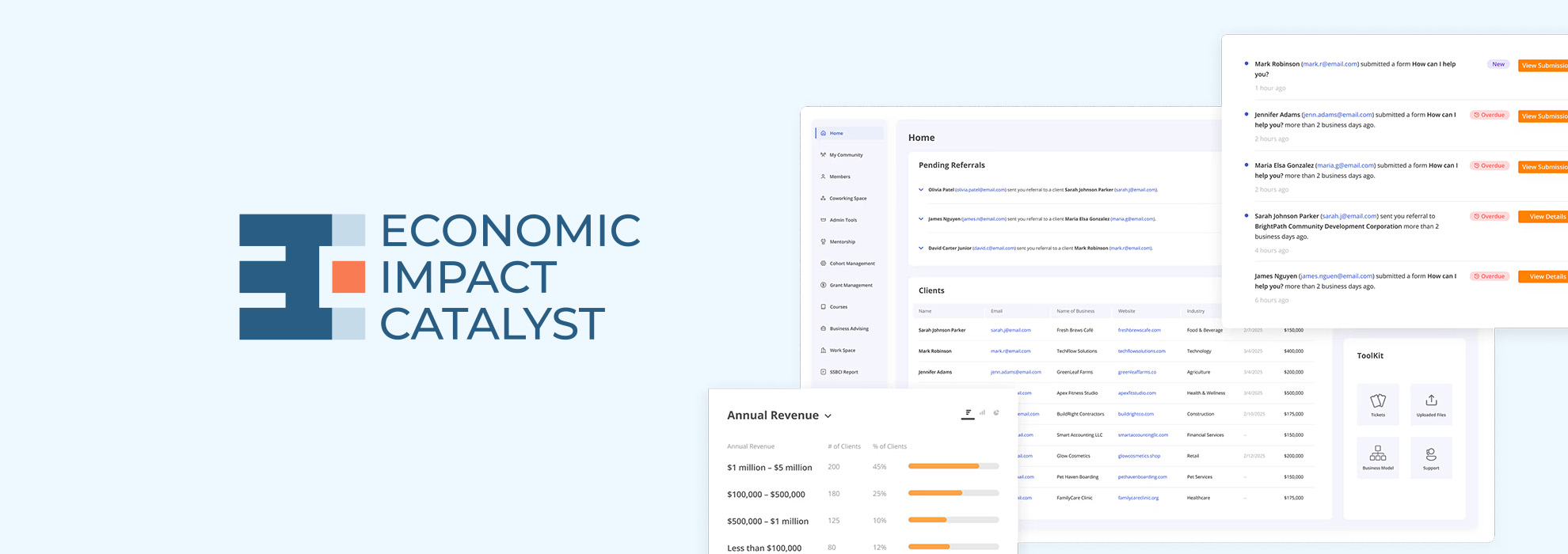
Economic Impact Catalyst is a mission-driven technology company that builds software to help economic development organizations, small business support groups, and ecosystem builders manage programs, track impact, and connect entrepreneurs with resources. Their flagship platforms—Startup Space and the AI-powered Catalyzer—centralize CRM, program management, resource mapping, and reporting in one system to power entrepreneurial ecosystems.
Website

Role

Website Designer

  • Conducted UX research, designed with mobile users in mind first then designed the tablet and desktop version.
  • Designed and prototyped using Figma.
  • Used Adobe Photoshop and Illustrator for image manipulations, graphics, and icons used throughout the design

PROBLEM

The original product page struggled with clarity, structure, and visual consistency. Key features of Startup Space were presented in a way that felt fragmented, making it difficult for users to quickly grasp the platform’s full capabilities or understand how those tools translate into meaningful community impact.

Stakeholders needed a product page that could clearly articulate the platform’s value, simplify complex functionality, and build enough confidence to encourage users to request demos and explore the product further.

TOOLS USED

  • Figma
  • Adobe Photoshop
  • Adobe Illustrator
  • Responsive Design
  • Webflow

PROCESS

The redesign process focused on aligning user needs with business goals by first understanding how different audiences interact with the product page. By mapping key user journeys and validating assumptions through research and iteration, the page was structured to surface value early, reduce cognitive load, and guide users toward conversion.

Key steps included:

  • Mapping user journeys for program administrators and community leaders
  • Conducting competitor analysis across civic tech and government SaaS platforms
  • Wireframing content to prioritize high-impact features and messaging
  • Iterating on designs in Figma using internal and stakeholder feedback
  • Creating reusable components such as feature modules, FAQs, and testimonials

INDUSTRY

  • Economic Development
  • Civic Technology (GovTech / Public Sector SaaS)
  • Entrepreneurship & Small Business Support
  • Financial & Grant Management (CDFIs / Funders)
  • Data & Impact Analytics

Strategy

The strategy focused on simplifying the experience while making the product the clear hero. Every design and content decision was made to highlight features, improve usability, and support discoverability.

  • Minimalist layout to reduce distractions and improve content hierarchy
  • Product-centered approach that showcases features in greater detail
  • SEO-friendly structure to support visibility and organic discovery
  • UX-focused layouts that guide users intuitively through the page
  • Dedicated product page designed to clearly present and explain core features

SOLUTION

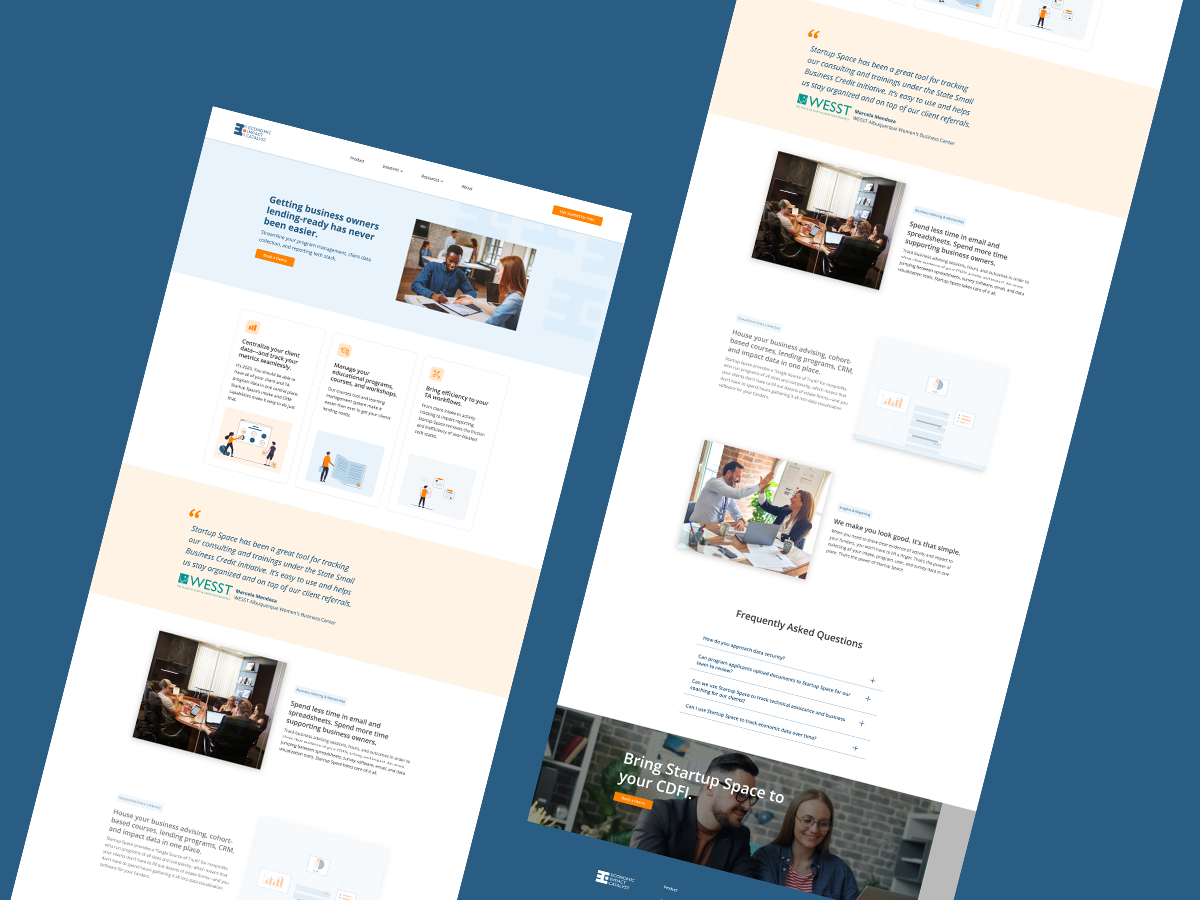
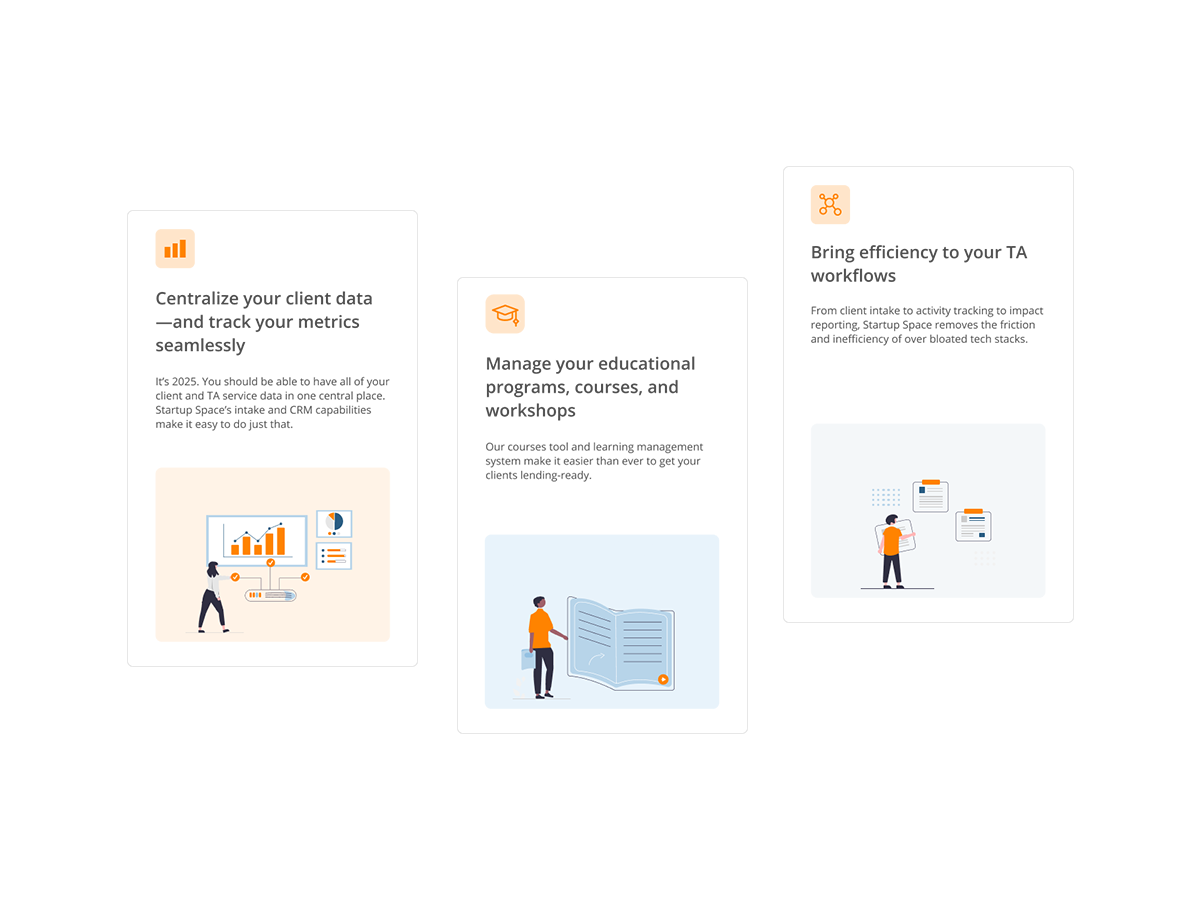
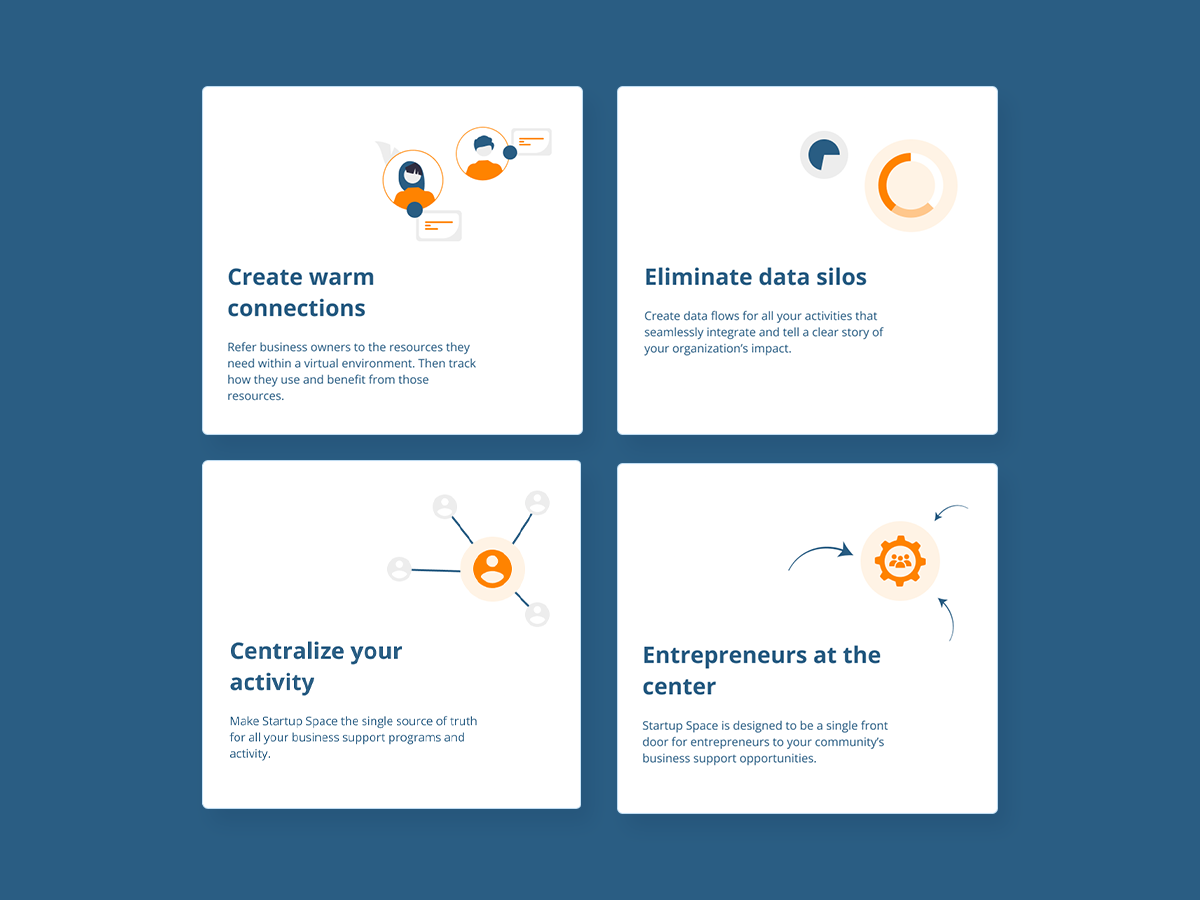
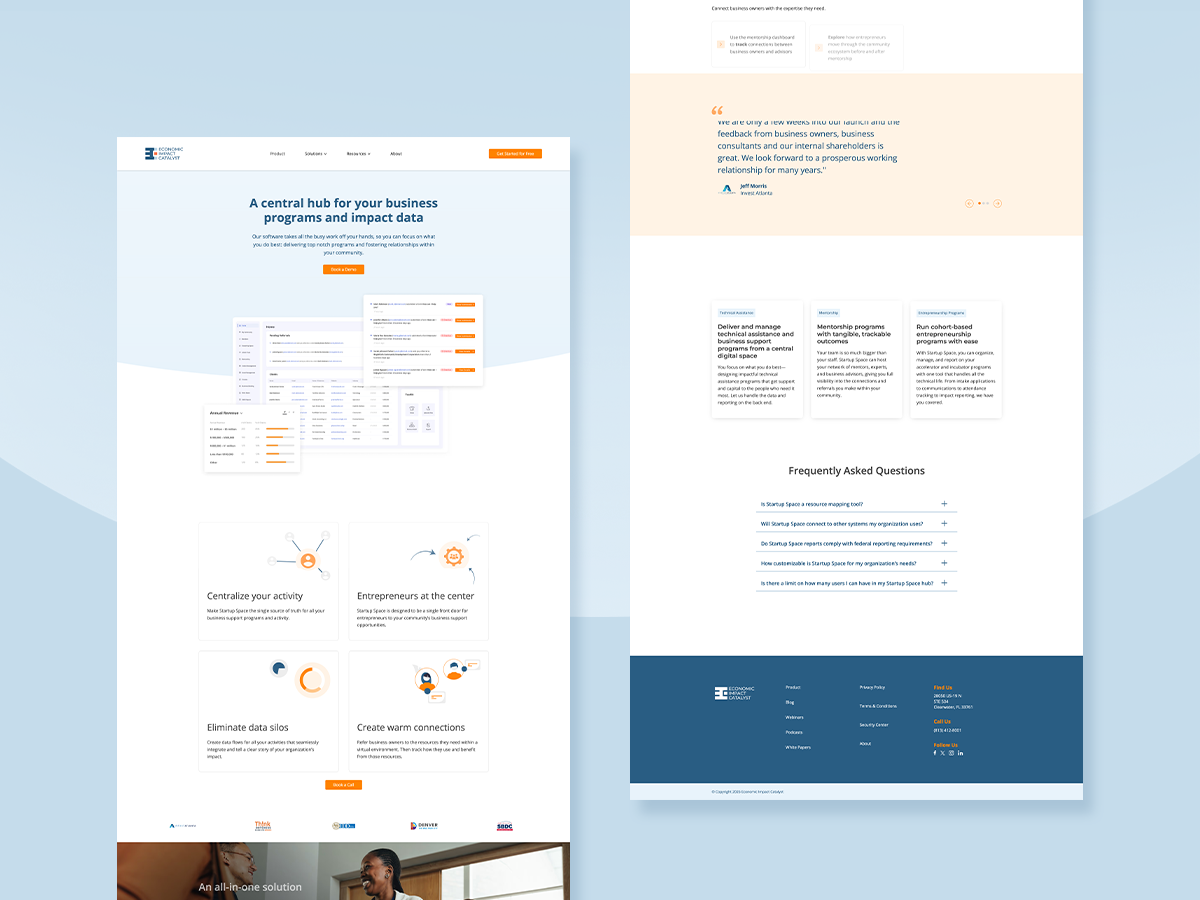
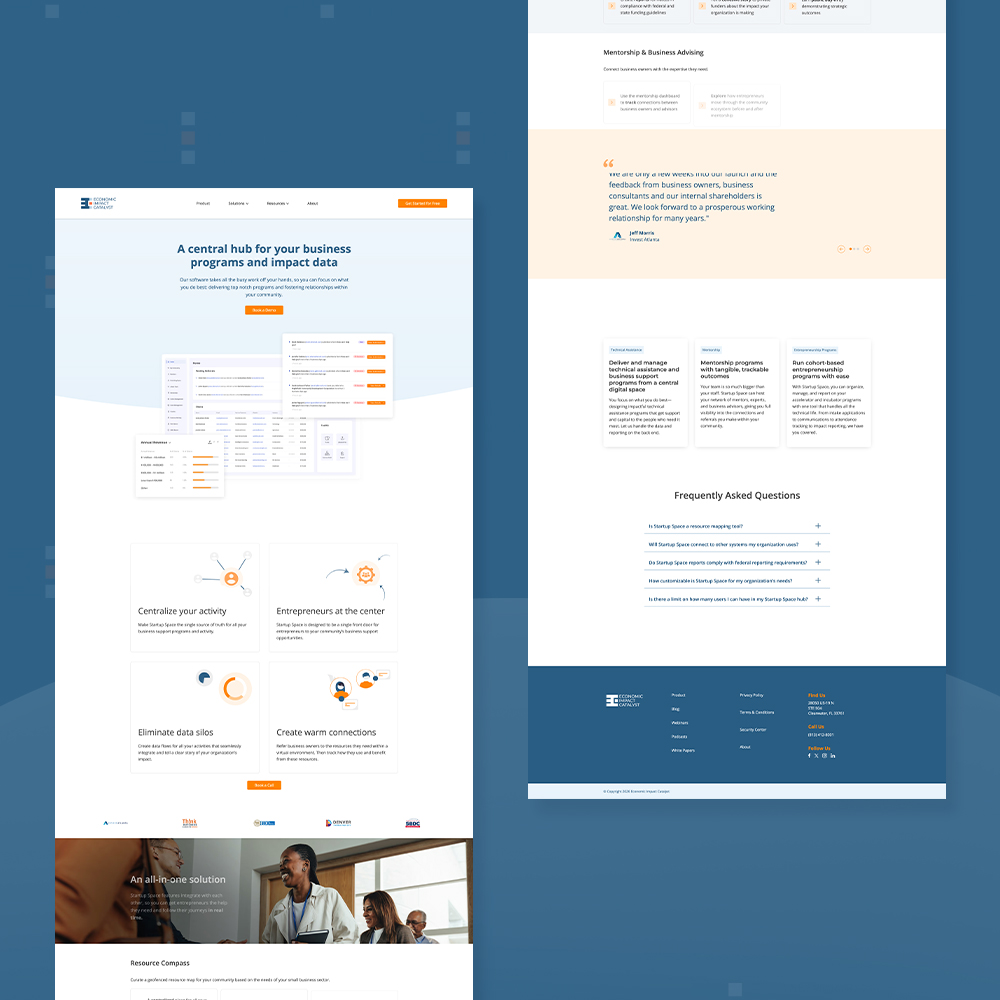
The final product page was built around clarity, trust, and conversion. A strong, benefit-driven hero section immediately communicates value and encourages demo requests, while feature sections use visual storytelling to showcase tools like grant management, co-working space tracking, and mentorship support.

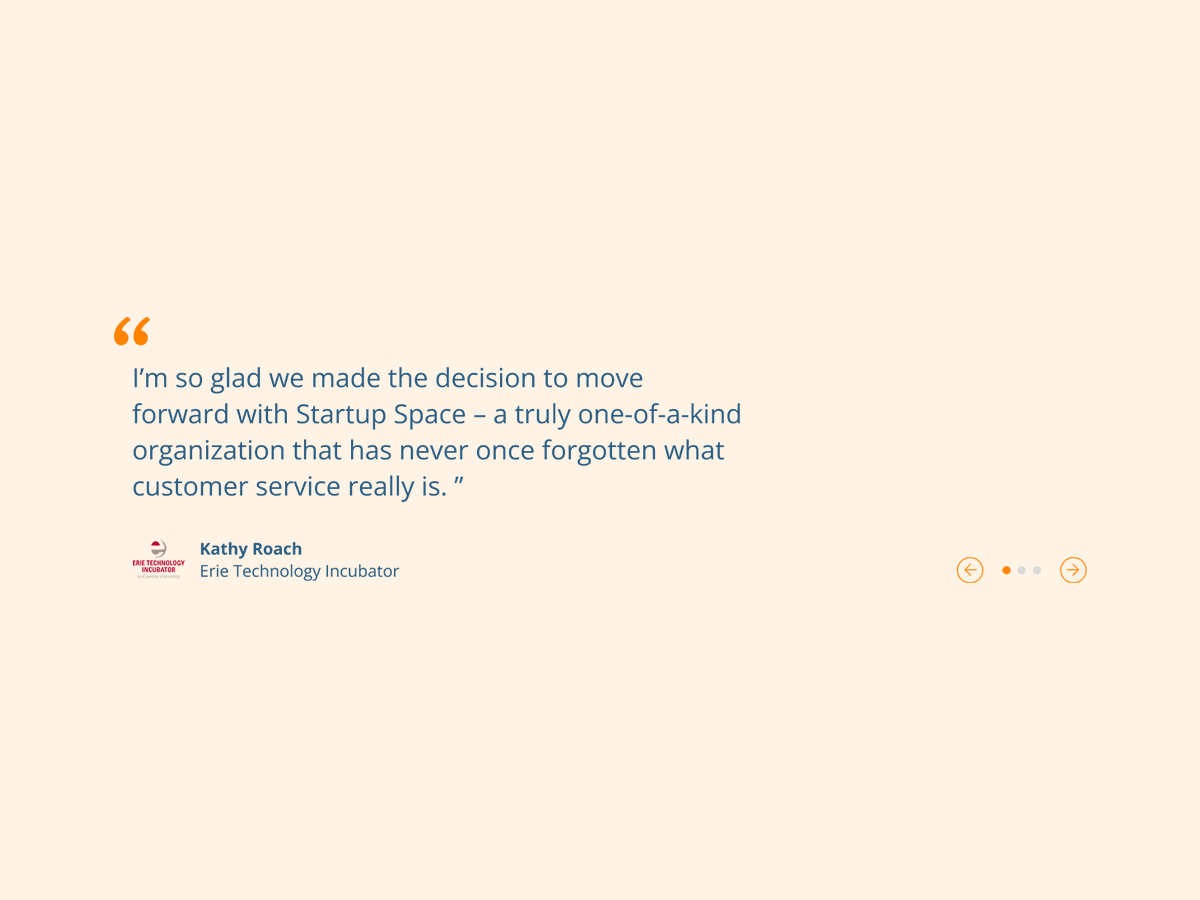
To keep complex information approachable, animated icons and data visuals were introduced to break up dense content. The page was designed using a flexible, modular structure, allowing content to evolve over time, with testimonials and FAQs strategically placed to reinforce credibility and reduce friction in the decision-making process.

Minimalist, Clean Design

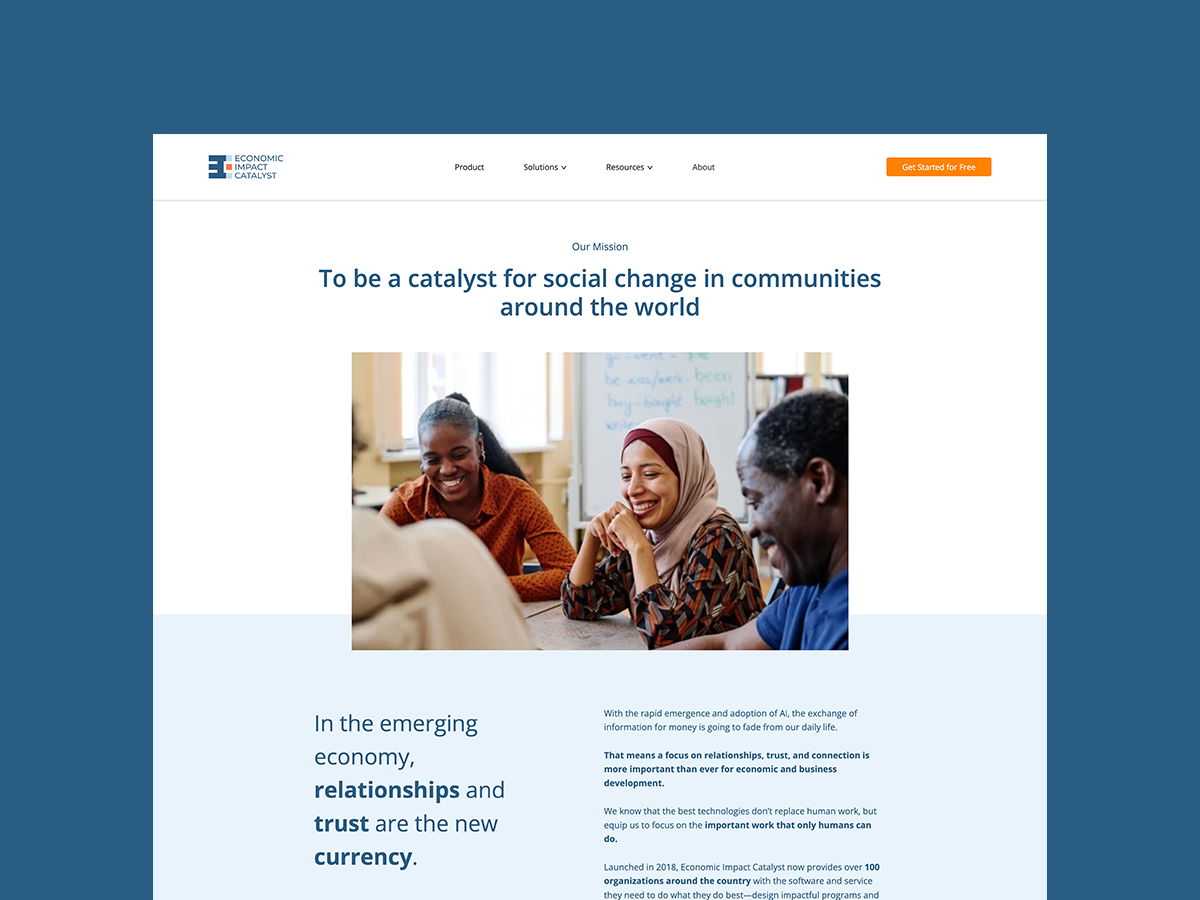
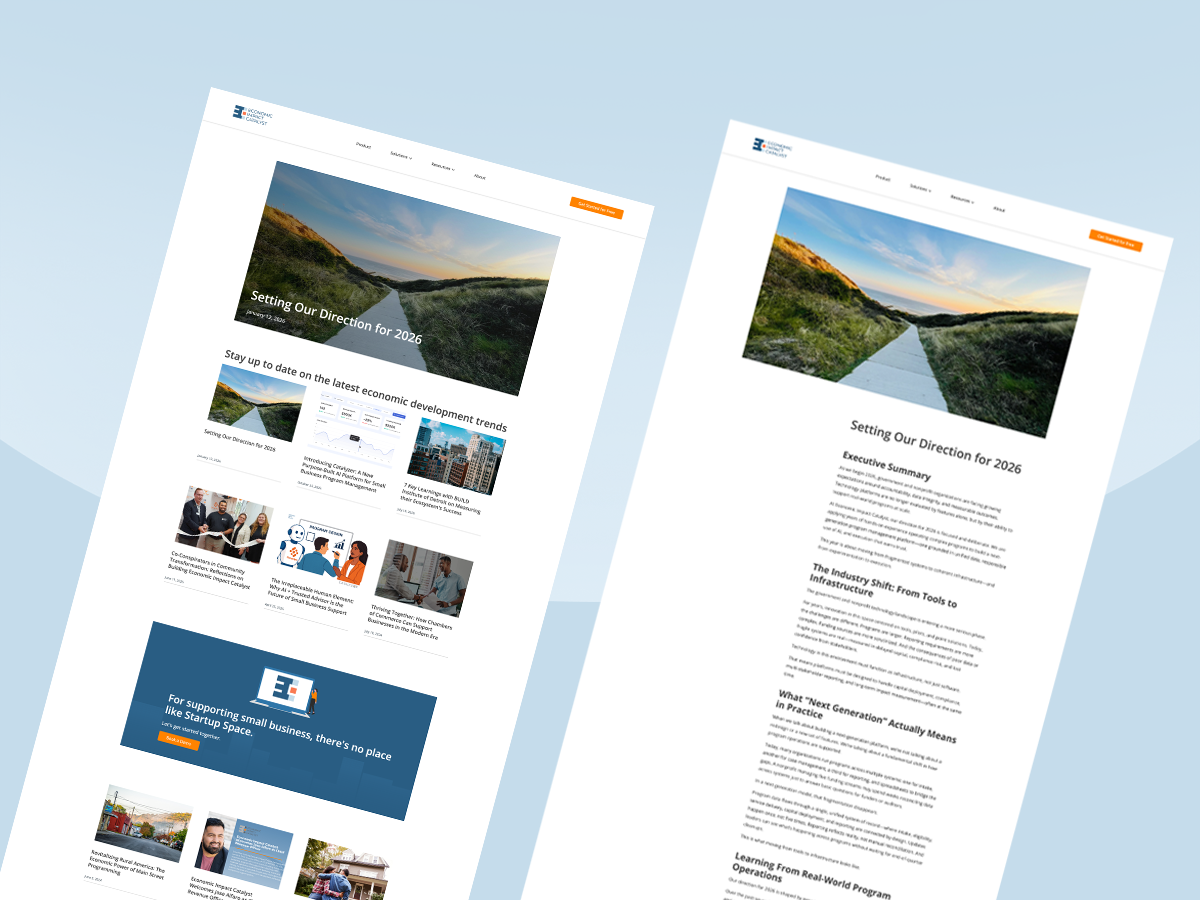
The Economic Impact Catalyst website features a modern, minimalist layout that uses clean typography, clear sections, and intuitive navigation to help users quickly understand offerings like Startup Space and Catalyzer without cluttered visuals. This streamlined design reinforces clarity and professional presentation.

Webflow-Style Build

The site’s responsiveness, smooth transitions, and structured layouts suggest it is built on a modern no-code framework such as Webflow, enabling flexible content management and consistent design across devices. This tech choice supports quick updates and a polished user experience.

Mobile & Tablet Friendly

The platform’s public site and associated SaaS tools are optimized for mobile and tablet viewing, scaling menus, text, and interactive elements so that economic development professionals and entrepreneurs can access features and information on the go.

👇 Website Design 👇

Full Image